



The Do’s and Don’ts of Sewage Treatment Tanks
25th February 2026
in news
Author: Jack Dunn
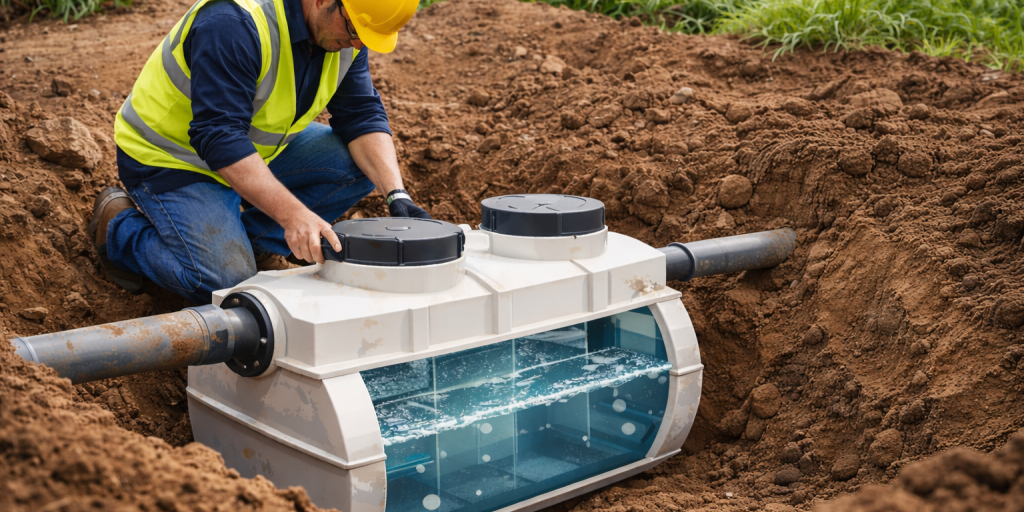
If you own a property that isn’t connected to the mains sewer, your sewage treatment tank is one of the most important systems on site. When installed and maintained correctly, it will run efficiently for years. When neglected, it becomes expensive, unpleasant and potentially illegal.
Below is a practical guide to what you should, and should not, be doing with your sewage treatment system.
What Is a Sewage Treatment Tank?
A sewage treatment tank is a self-contained system that treats wastewater from your property before discharging clean effluent into a drainage field or watercourse.
Unlike a traditional septic tank, these systems use aeration and bacteria to treat waste to a much higher standard, helping properties comply with the UK’s General Binding Rules.
If you’re unsure which system suits your site, review the range of sewage treatment tanks available, including options for domestic and commercial use.
The Do’s
- Do Arrange Regular Servicing
An annual service by a qualified engineer is essential. This ensures:
- The compressor and electrics are functioning correctly
- Sludge levels are within safe limits
- The system remains compliant with Environment Agency requirements
Skipping servicing is the quickest way to shorten the lifespan of your system.
If you haven’t had your tank emptied recently, you may also need a professional septic tank emptying service.
- Do Use the System as Intended
Sewage treatment tanks are designed to process:
- Toilet waste
- Household wastewater (sinks, showers, washing machines)
They are not designed to handle inappropriate materials (see the “Don’ts” below).
- Do Monitor Sludge Levels
Even though sewage treatment plants break down waste more efficiently than septic tanks, sludge still accumulates over time. Most systems require desludging annually, depending on household size and usage.
Neglecting this leads to:
- Poor treatment performance
- Blocked outlets
- System failure
If you’re unsure about capacity requirements, speak to the team about selecting the correct domestic sewage treatment tank for your property.
- Do Ensure Proper Installation
Incorrect installation causes more problems than poor maintenance.
Your system must be:
- Installed at the correct depth
- Properly levelled
- Backfilled correctly
- Connected to an appropriate discharge point
If you’re still in the planning stage, review installation guidance alongside your chosen underground water and waste tanks.
- Do Check Compliance with UK Regulations
Since 2020, the General Binding Rules require septic tanks that discharge directly to watercourses to be replaced or upgraded. Many property owners have moved to sewage treatment plants to remain compliant.
If you’re upgrading from an old system, make sure the new installation meets current standards.
The Don’ts
- Don’t Flush Non-Biodegradable Items
This is the most common cause of failure.
Do not flush:
- Wet wipes (even “flushable” ones)
- Sanitary products
- Nappies
- Cotton buds
- Dental floss
These items do not break down and will block pumps, pipes and filters.
- Don’t Pour Fats, Oils or Chemicals Down the Drain
Fats, oils and grease (FOG) solidify in pipework and disrupt bacterial activity inside the tank.
Avoid disposing of:
- Cooking oil
- Paint
- Solvents
- Strong disinfectants
- Bleach in excessive quantities
Sewage treatment systems rely on healthy bacteria. Harsh chemicals kill them, reducing treatment efficiency.
- Don’t Ignore Warning Signs
Early warning signs include:
- Bad odours near the tank
- Slow-draining sinks or toilets
- Alarm activation
- Pooling water near the discharge area
Ignoring these usually turns a minor issue into a costly repair.
- Don’t Drive or Build Over the Tank
Sewage treatment plants are buried underground but are not designed to withstand vehicle loads unless specifically reinforced.
Avoid:
- Parking vehicles over the tank
- Installing sheds or extensions above it
- Placing heavy landscaping features on top
Damage to the tank body or pipework can result in collapse or leakage.
- Don’t Oversize or Undersize Your System
Installing a tank that is too small will overload the system. Installing one that is too large can lead to insufficient bacterial activity due to low usage.
Sizing should be based on:
- Number of bedrooms
- Daily occupancy
- Usage type (domestic vs commercial)
A sewage treatment tank is not a “fit and forget” system. It is a working piece of environmental infrastructure that protects your property and the surrounding land.
Maintain it properly, use it responsibly and ensure it complies with UK regulations. Do that, and it will serve your property reliably for decades.
If you need advice on installation, upgrades or replacement systems, review the full product range at Tanks R Us or speak directly to a specialist before making a decision.
One of the largest selections of tanks in the UK
Chat online or call us today on 01469 531229
Related Products
More Articles

HVO - The Potential Solution For A Sustainable Future
15th March 2023 in Tank accessories
The benefits of steel oil tanks for domestic heating oil
4th April 2023 in oil
Top Safety Tips for Handling and Maintaining Chemical Storage Tanks
8th November 2024 in oil
Essential Guide to Livestock Watering Tanks: Solutions For Remote Fields
12th February 2025 in water




Help
About Us
My Account
Newsletter Sign Up
Inspiration direct to your inbox, please enter your email below...
© Tanks R Us. All rights reserved. Registered in England. Registration number. 05804332. VAT number 364402764