



Caring for your domestic oil tank: A maintenance guide
6th September 2023 in oil
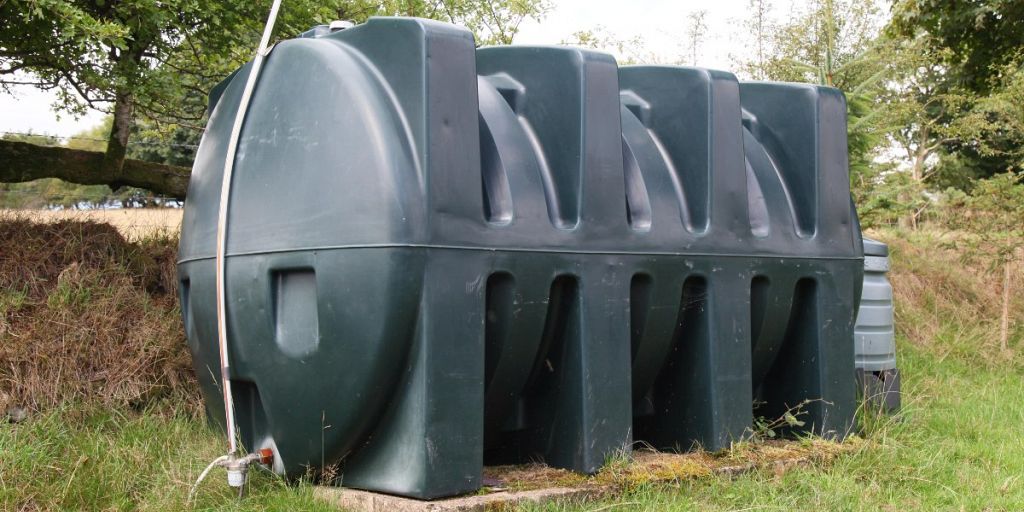
Once you have your oil tank installed, it’s very important to look after it. Carrying out oil tank maintenance on a regular basis will help you ensure that it functions correctly and you achieve system efficiency on a consistent basis. You will also prolong the tank’s lifespan (they can last for up to 20 years if well looked after) as well as avoid expensive repair bills.
In this edition of our blog we’re focusing on general ways you can look after your tank, and offering a few tips to make sure you get the most out of it.
Is the position of my oil tank important?:
Believe it or not, the position of your oil tank (ie. whereabouts it is situated on your property) is quite important. Your tank can be installed outdoors, indoors or underground (but its position must be compliant with any building regulations applicable to your property). There are benefits to each.
What are the benefits of installing an oil tank indoors?:
When your oil tank is installed indoors it is protected from environmental damage (in other words adverse weather conditions) and from theft. Under normal circumstances the temperature indoors will also be higher than that outdoors, and this will increase burning efficiency and reduce the risk of your freezing. There are rules to follow if you intend to install a tank indoors.
- Must be 3,500 litres or less.
- Must have a secondary container.
- Must be within a one-hour fire-resistant chamber.
- Must be located at the lowest possible level.
- Must have ventilation to the outside.
What are the benefits of installing an oil tank underground?:
The installation of an underground tank will save you space, though it does mean maintenance will be more difficult. There are rules to follow if you intend to install a tank underground.
- Must be specifically constructed for underground use.
- Planning permission must be obtained.
- Recommendations in the Environment Agency's Pollution Prevention Guidance note PPG 27 must be followed.
How do I protect my oil tank against theft?:
The oil you will store in your tank is not cheap, and therefore attractive to thieves – and so you will need to do everything you reasonably can to protect yourself from this type of robbery. You should ensure that your tanks is locked and secure (or, if it is outdoors, try and obscure it from public view in some way so that its presence is not necessarily noticed). You could also install sensor lighting around the tank area or even CCTV.
Should I check my oil tank’s fittings?:
Once you have installed your tank you should familiarise yourself with the fill point, vent and contents gauge so that you are able to check the oil levels. The gauge and spillage alert alarm (if there is one) may be found inside your property, dependent on the type of system and tank you have installed. You should also be familiar with the supply pipes, which should be easily accessible whether they are above ground or underground.
You should check these components of tank and system regularly. If there is an emergency (eg. a leak) it is a good idea to know in advance where the isolation valve is, and then you can shut it off immediately.
How do I deal with water contamination in an oil tank?:
The exterior condition of your tank is important, but when it is looking good can sometimes lead to problems as this is when complacency or overconfidence creep in and things get taken for granted. The interior condition of your tank is just as important as the exterior, and water contamination within it can be a serious problem.
How does water get into a tank?:
Water’s route into your tank can be due to an incorrectly fitted or closed filler cap, seals that have become corroded over time, vents that are damaged or even a split or hole in the walls of the tank itself. Even condensation can play a part in the process of contamination, during the hotter months of the year. Water contamination is very difficult to detect from inspection alone, as water sinks to the bottom and therefore you won’t be able to see it – though you will certainly begin to experience problems with your heating system.
How do I prevent water contamination?:
If you suspect you already have a contamination problem, then you should get your tank checked over by an expert (it’s worth having an expert check over your tank on a fairly regular basis anyway, by the way). Preventative steps regarding water contamination include making sure that all seals are functioning correctly, and that lids and caps are tightly closed, as well as keeping your tank topped up so that there is not the physical space for condensation to form. You should also shelter your tank appropriately to protect it from colder season weather conditions. Read our longer guide to dealing with water contamination.
Oil Tank Care Checklist
We just recommended having your oil tank checked over regularly and cleaned by ‘an expert’ – and this means an OFTEC qualified heating engineer. Tanks R Us engineers are OFTEC approved and will inspect your oil tank before offering a thorough cleaning service, ensuring your tank’s premium efficiency and performance. You can perform visual inspections yourself in between these checks and cleans, and you can also ensure the upkeep of your tank by following this checklist:
- Remove debris from the external bund
- Shut / close access points when not in use
- Clean oil spillages made during delivery
- Check for oil stains on the tank supports or surrounding ground
- Check for bulging, holes or cracks on the tank itself
- Check for rust or discolouration on the tank itself
- Check all connections, seals and lids / caps are secure
- Check all pipework is secure and intact
- Treat / paint steel tanks when necessary
- Have an oil spill kit in case of emergencies (sorbent materials, leak-sealing putty and drain blockers)
What else can I do to maintain my oil tank?
Check for leaks:
In the list we supplied above we mentioned checking connections, seals, lids, caps and pipework are fitted correctly and intact. You should regularly check for leaks at these points. A leaking oil tank is a serious problem, as the impact on the surrounding environment can be catastrophic from an ecological point of view, and extremely costly to clean up (as well as costly from losing valuable fuel). It is essential to address and correct any leak issues as soon as possible. For more information on dealing with oil spill issues read our previously published guide.
Debris:
You should ensure that the access to your tank is completely clear of any clutter or debris and that, in fact, it is very easy to reach. For instance, don’t pile stuff up all around it, or against it, and don’t used the top of it as a shelf. If the tank is in its own fenced-off area then you should try to make sure that there’s enough room (about two feet should do) around the tank for someone to walk.
Blockages:
Keep the area surrounding your tank clear of plants and foliage. Ensure that all vents, gauges and connections are sealed and closed to prevent garden debris, rainwater or insects clogging the system. Any water or sludge which makes it from your tank into your heating system will damage it.
At Tanks R Us our engineers are OFTEC approved, with plenty of experience in both domestic and commercial tanks. We also offer a 24 hour emergency tank breakdown service, so an enginner will come out to fix your tank within 24 hours of your breakdown call. You can contact us for more information.

One of the largest selections of tanks in the UK
Chat online or call us today on 01469 531229
Related Products
More Articles

How to Prevent Oil Theft – 8 Security Measures
1st August 2022 in oil
7 signs your oil tank needs replacing
4th August 2022 in oil
What are the advantages of a bunded oil tank?
6th August 2022 in oil
Our top 8 ways to maintain your oil tank
8th August 2022 in oil




Help
About Us
My Account
Newsletter Sign Up
Inspiration direct to your inbox, please enter your email below...
© Tanks R Us. All rights reserved. Registered in England. Registration number. 05804332. VAT number 364402764