



Oil Tank Installation: Guide to Rules and Regulations
29th January 2024
in oil
Author: Jack Dunn
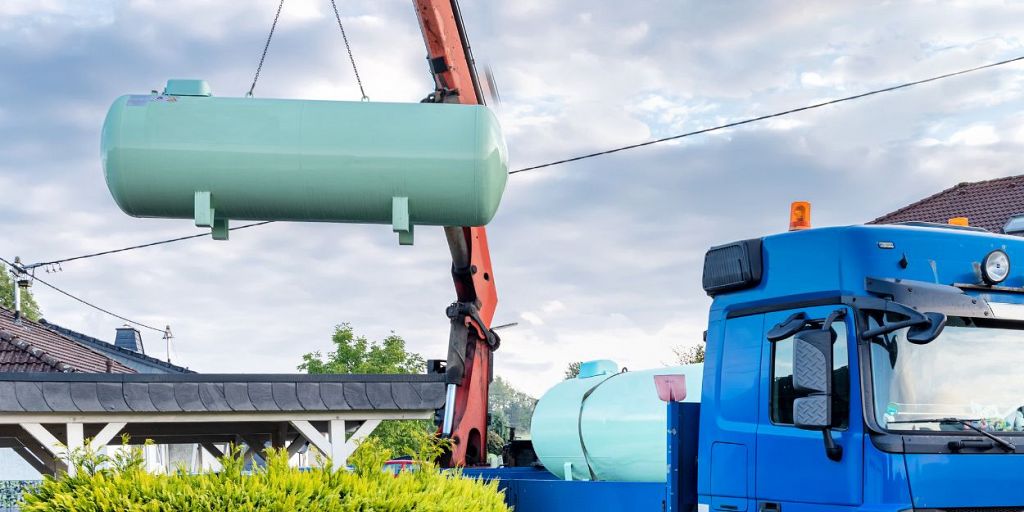
There are regulations which govern everything around oil tanks, including oil tank installation, and they have been established by the government to serve a deliberate purpose. That is: To safeguard individuals, residences and the environment, and to mitigate the risk of fires and environmental damage.
It is necessary to conduct an annual check on your oil tank to ensure ongoing compliance with the regulations, and to organise repair or oil tank replacement if yours is outside of them. This edition of our blog focuses on oil tank regulations – their bases, construction and installation requirements.
What are the rules for installing a tank?
Whether you are installing a new oil tank at a domestic property, relocating an existing one or replacing, it’s incumbent on you to check your local authority’s building and planning regulations and oil tank installation guidelines. These may have changed, and therefore you could find yourself in unwitting contravention of them. However, since 2022 the regulations regarding installation of oil tanks state that planning permission is not required if the tank adheres to the following conditions:
- The height of the tank is not over 3 metres (9.85 feet)
- If within 2 metres of a boundary the total height must not surpass 2.5 metres
- The tank is not situated in front of the main elevation fronting a public road
- Additions or structures cover below half of the area surrounding the property
For much more detailed information, you can visit the official government website.
OFTEC guidelines on tank installation
There are OFTEC guidelines to adhere to governing things like how far away a tank needs to be from your house. Oil tanks are also required to meet fire separation distances so that the fuel stored within is protected from any nearby fire or heat source. Tanks should be sited:
- 1.8m (approx. 6 feet) away from non-fire rated building eaves
- 1.8m (approx. 6 feet) away from non-fire rated structure (eg. a shed or outhouse)
- 1.8m (approx. 6 feet) away from doors or windows (or other openings) in a fire rated building or structure (e.g. brick built garage or house)
- 1.8m (approx. 6 feet) away from oil-fired appliance flue terminals
- 760mm (approx. 30 inches) away from a non-fire rated boundary (eg. wooden fence)
- 600mm away (approx. 24 inches) from screening (eg. trellis) that is not part of the boundary
If these requirements cannot be met, then a fire protection barrier with a minimum fire rating of 30 minutes has to be installed, with a minimum distance of 100mm between the tank and the barrier.
Oil tank base installation regulations
It is also important for due consideration to be given to the base the tank is sited upon. Key things to consider include the weight-bearing capability of the base - accounting for the full weight of the tank plus further weight when it is filled. This can amount to a weight in the tonnes, even for domestic oil tanks. The base material must be impermeable (ie. not allow water to leak through), and it must be made from non-combustible materials (eg. concrete, paving stones or stonework). The base must be sited in a position facilitating adherence to all regulations that minimise the risk of fire from nearby structures.
Oil tank regulations for listed buildings
A listed building is a building or structure which has been deemed to be of national importance – ie. it is of special architectural or historical interest – and considered worthy of legal protection to maintain its state. In instances when an oil tank is being installed at a listed building, it is mandatory to obtain formal planning permission. In these circumstances strict adherence to regulations is required – in other words there is no leeway whatsoever.
As before, it is advisable to check with the local authority to verify that rules and regulations remain unchanged:
- Overground tanks must be equipped with protective fire guard
- Tanks close to groundwater must feature additional safeguards (e.g. bunded)
- A fire valve must be installed where the pipe enters the building
Rules around replacement tanks
The lifespan of an oil tank depends on the material used in its construction. Plastic tanks should last between ten and fifteen years, while steel tanks should last approximately 20 years. It is recommended that you check your oil tank regularly for damage or degradation, as catching problems early and repairing or replacing it entirely will eliminate risk to the environment (and financial losses). All the rules and regulations explained in this edition of our blog should be adhered to whatever material your replacement tank is made from.
One of the largest selections of tanks in the UK
Chat online or call us today on 01469 531229
Related Products
More Articles

How to Prevent Oil Theft – 8 Security Measures
1st August 2022 in oil
7 signs your oil tank needs replacing
4th August 2022 in oil
What are the advantages of a bunded oil tank?
6th August 2022 in oil
Our top 8 ways to maintain your oil tank
8th August 2022 in oil




Help
About Us
My Account
Newsletter Sign Up
Inspiration direct to your inbox, please enter your email below...
© Tanks R Us. All rights reserved. Registered in England. Registration number. 05804332. VAT number 364402764